

About this project
A populated database gives an application something to show. It does not tell us what happens next. We use our Forge packages to build self-contained environments where records change, work progresses and the application has to respond. The approach supports both our own products and client work; this page shares the method without identifying individual projects.
Each environment has its own database. Repeatable starting scenarios establish the relationships and history; scheduled activity then exercises workflows over time. Shared simulation controls manage lifecycle and execution, while the application uses its own services and persistence. We can examine transitions and accumulated state rather than only carefully prepared screens.
We think of this as a near digital twin of relevant application behaviour: useful for development, demonstrations and discussing how work should flow. It is not a continuously synchronized copy of production, and simulated activity is not evidence of real users, transactions or business results. The useful resemblance is in the behaviour we choose to model.
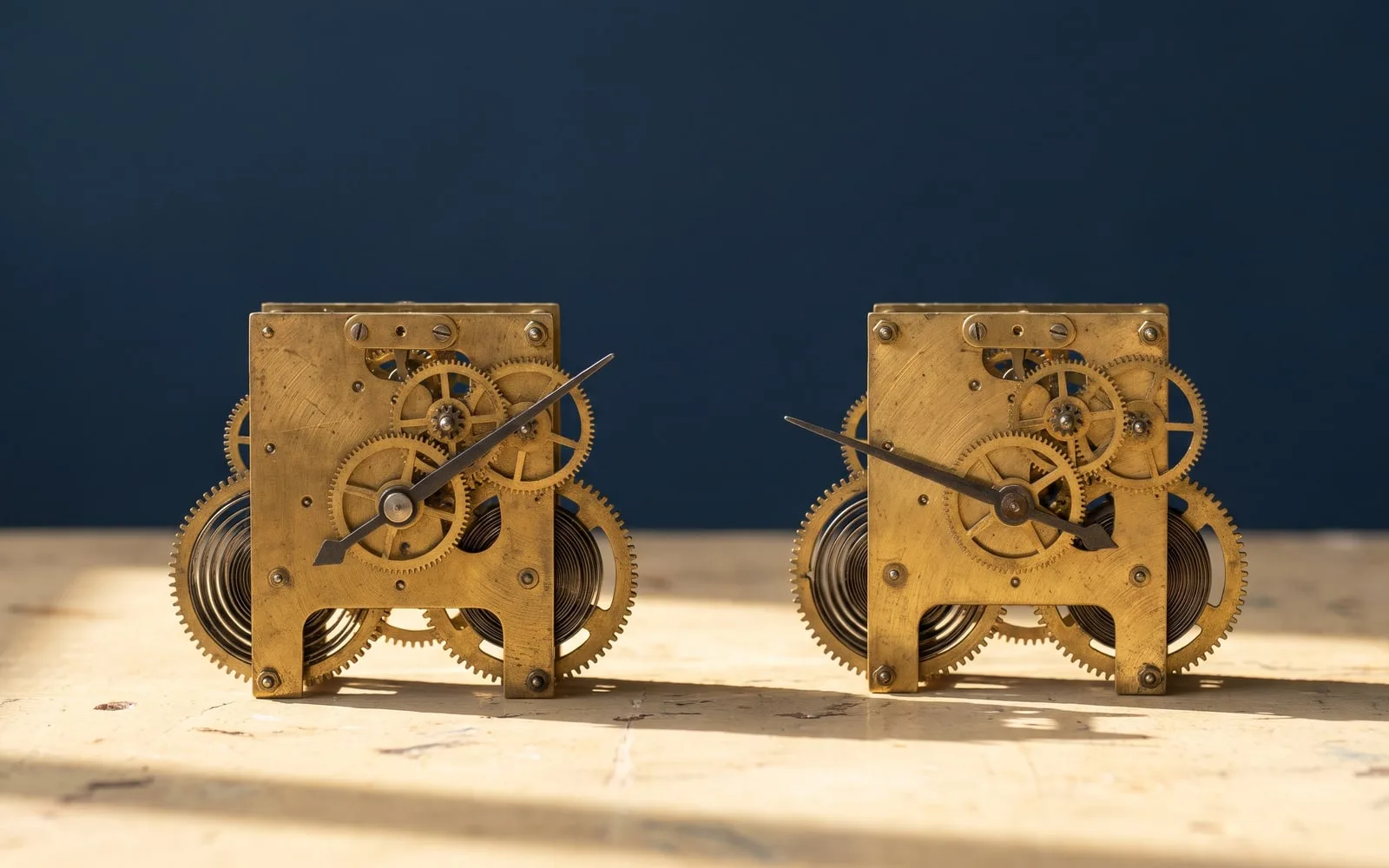
Read Beyond sample data: software that keeps moving for the reasoning behind this approach. The paired clockwork mechanisms are an editorial metaphor, not a customer system.
Highlights
- Own database and application services, not just static screens
- Repeatable scenarios and scheduled activity over time
- Shared Forge building blocks for lifecycle and execution
- Self-contained environments, separate from production


