

About this project
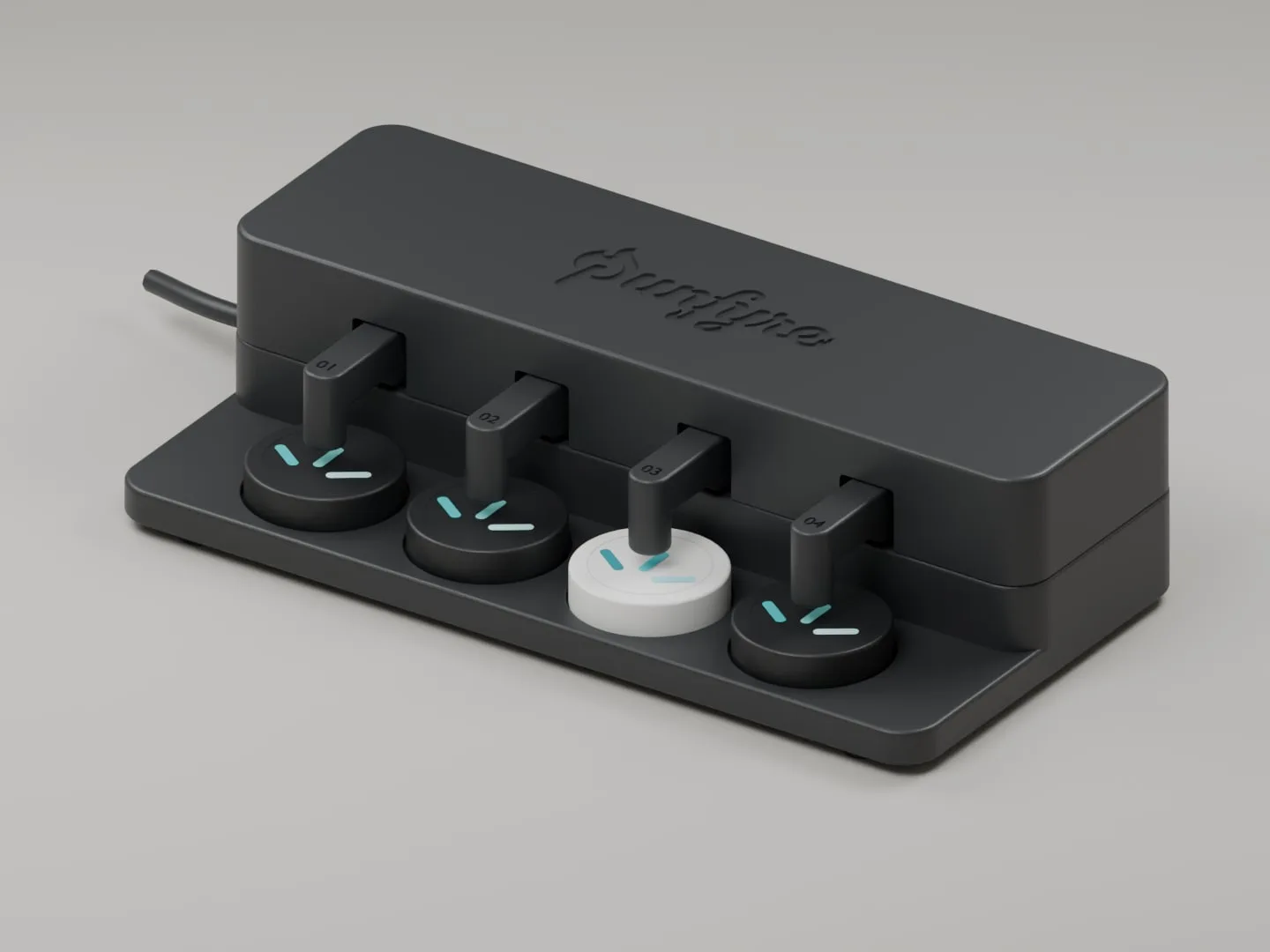
Some software interactions end at a physical button. Flic Presser is our small hardware project for that boundary: a four-bay dock whose servo-driven fingers are designed to press Flic buttons. We develop the mechanical design, controller firmware and local TypeScript control together, so a sequence in software has a deliberate physical counterpart.
The current design combines one continuous base, a removable hood and four numbered fingers. Open button seats, accessible electronics and a serviceable assembly matter as much as the outer shape. Like our office wallboard enclosure, the project brings software and our own 3D design into the same piece of work.
A native TypeScript CLI and local API handle clicks, double-clicks, bounded holds and timed sequences. Explicit arming, exclusive control, cancellation and watchdog release are part of the design. We can test sequences and cancellation in software before commissioning the hardware.
The gallery shows the dock’s 3D design. Physical assembly and button calibration are the next steps. Read When software needs to press a real button for the design story.
Highlights
- Four button bays with servo-driven, numbered fingers
- Custom base, removable hood and accessible electronics
- TypeScript CLI and local API for timed button sequences
- Digital prototype; physical fit and operation still to validate


